

Providing attentive, non-judgmental, individualized counseling services for:
-children 3-10 struggling with loss & separation
-adults wanting a different relationship with their OCD and traumas
Welcome
Hi, I'm Eugenie (they/them)! I am glad you are here and honored you have landed on this page.Finding a therapist can be a very draining process, especially if you are on a budget, struggle opening up due to past traumatic experiences, and want your (or your child's) identities to not only be accepted but treasured.We can work together to unravel the tight knots that have formed throughout your years of existing. It is possible to not only feel better, but to gain a deeper understanding of yourself and the world you live in.[email protected] | 314-200-5073

Missouri LCSW #2025039245
My Practice
In network with:
Ambetter
Cigna
Healthy Blue
Home State Health
Medicaid
MO Healthnet
UHC Community Plan
United Healthcare
Private pay rate:
$125
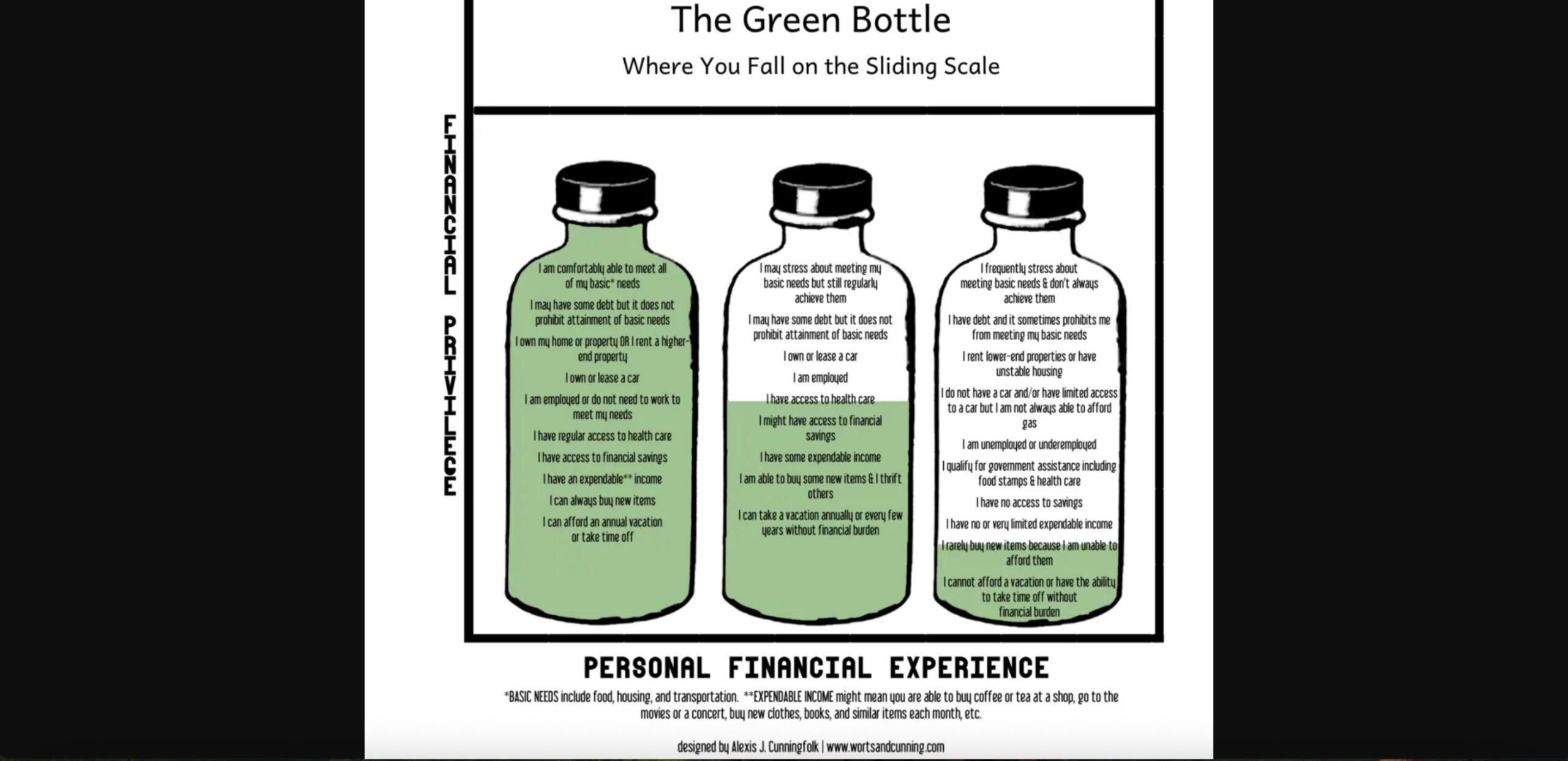
Sliding scale options based on the green bottle model
Superbill provided for insurance reimbursement if needed
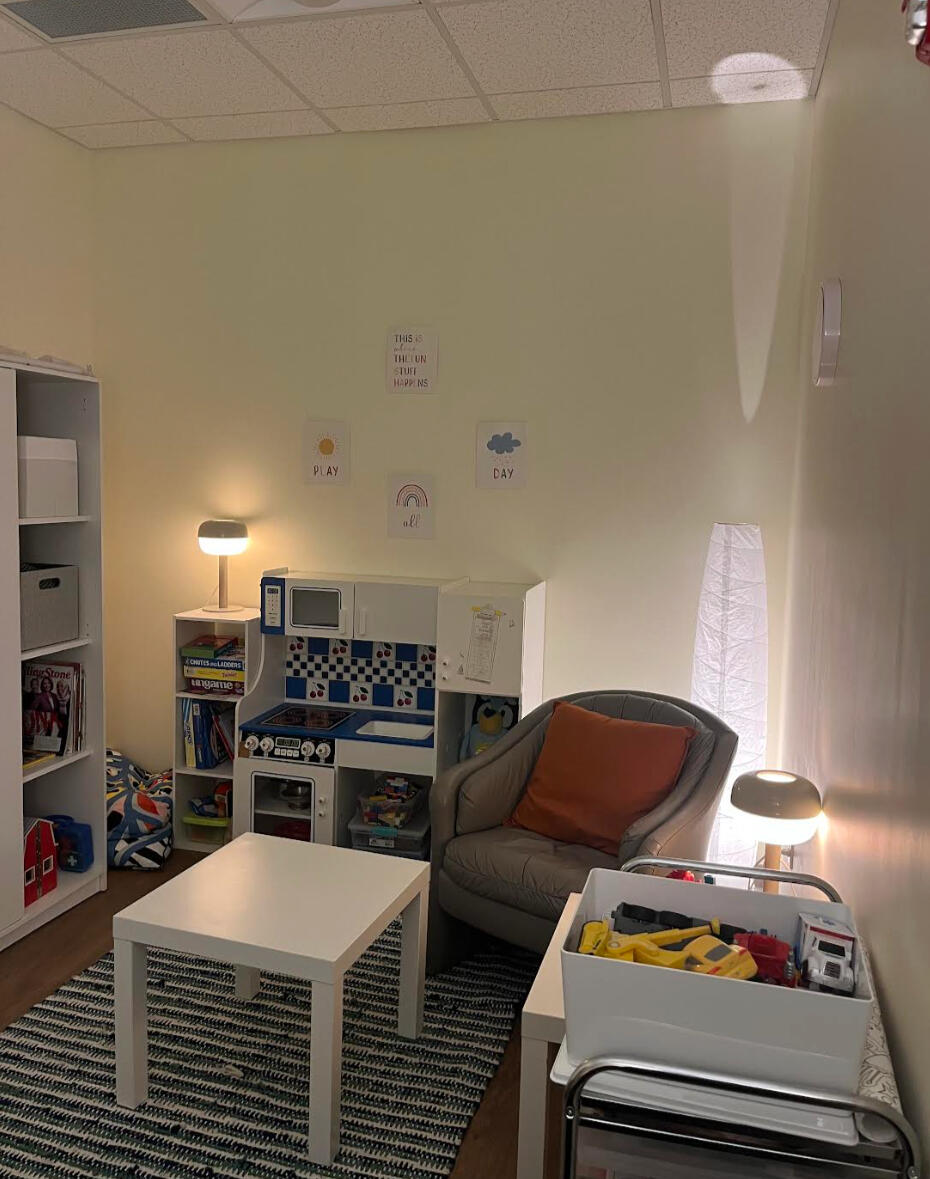
1015 S. Compton Ave St. Louis, MO 63103 *currently teletherapy only
ADA accessible
Gender neutral bathrooms
Free parking
Individual Therapy

My philosophy: I believe I am creating a unique therapy approach with each individual client I work with. Many of the clients I serve are part of a marginalized status, whether that is being part of the LGBTQ+ community or being a member of the global majority. A lot of evidence-based research, unfortunately, have not been done with us in mind. However, what is certain, time and time again, is that feeling seen, heard, and given unconditional positive regard will give us the strength and courage to feel our feelings, reflect on our past, and forge a path that we truly want forward.Approach to OCD: If you've felt like OCD has robbed you of your ability to make decisions, you are not alone. Acceptance and Commitment Therapy (ACT) is a therapeutic approach that helps you catch your OCD loops faster by relating differently to your thoughts. ACT believes that you can live a meaningful life even with OCD symptoms, by taking committed actions based on your values and learning to tolerate distress. While there have been traditional approaches of fighting against your OCD, ACT asks: what would it feel like if we could live a meaningful life in spite of it all?Approach to trauma: I believe that trauma did not start with us- it did not start the moment we were born- but it spans generations and millennia. Advances in epigenetic have shown this to be true. Sometimes it can be hard to remember that when we are frustrated with ourselves for our bodies and minds not cooperating. By being witnessed and met where you are at, provided a safe space to uncover how you feel, and collaboratively figuring out your goals and how to achieve them, you can break patterns.
Play Therapy

My philosophy: As a therapist who believes in children's rights to play, I utilize play therapy, specifically non-directive child centered play therapy. This means:
Children guide the sessions and are given a warm, accepting environment in which they can use toys as their words and play as their language to express what has been troubling them.
Many times, children will act out with toys the things they have witnessed or experienced that were hard. Through these repetitive themes, children are able to come up with a different result (often one that they wish they had), and work on their self-esteem, initiative, and attachment.
Although sessions have less limits than there normally are in the outside world, children also learn how to regulate themselves through the limits that are set in the therapy space.
Approach to separation and loss: Children who have experienced separation and loss are more likely to either blame themselves for what happened or go into deep mistrust of their own reactions and bodies. We end up seeing them act out, get anxious, or shut down completely. During their formative years, providing them a space where they can release difficult emotions and learn to trust themselves and their surroundings again can be one of the most loving things we can do for them!
Connect With Me
I offer a 20 minute consultation call to hear more about what you are wanting from therapy and to see if we are a good fit. To schedule that call, please email me at [email protected] or leave a message at 314-200-5073. You can also fill out this contact form!
Resources
If you are in a mental health crisis and do not want to call the police, please click here for some alternatives.
How do I know my child would benefit from therapy?
1.3.26 by Eugenie BangChildren, just like adults, experience anxiety, depression, and other mental health concerns. While adults often have words for what they’re feeling, children might not necessarily describe them the same way.....
How do I know my therapist will not judge me for my intrusive thoughts?
1.14.26 by Eugenie BangIf you struggle with intrusive thoughts, you are not alone. Contrary to what the media has shown, intrusive thoughts aren’t funny quirks, but rather detrimental thoughts that are not in line with our values, cause us significant distress, and have us stop in our tracks for hours, even days at a time......
What if coping skills I learn in therapy don’t help me with my anxiety?
1.14.26 by Eugenie BangThere are countless coping skills out there for helping with your anxiety- some of the most popular ones are exercising, deep breathing, temperature regulation, mindfulness/meditation, and 5-4-3-2-1 grounding method (identifying 5 things you can see, 4 things you can touch, 3 things you can hear, 2 things you can smell, 1 thing you can taste).....
About Me

I'm Eugenie (they/them), a licensed clinical social worker in the state of Missouri. I graduated from the Brown School at the Washington University in St. Louis with a Masters in Social Work and a concentration in Violence and Injury Prevention. I am working towards my Registered Play Therapy License and am constantly learning more about how to be a better therapist. For the past three years, I have worked in local trauma-informed community agencies focused on serving children, youth, and families, with emphasis on marginalized and immigrant populations. I am continuing my community work with survivors of domestic violence currently and envision a world where survivors who have experienced abuse have the resources to not only survive but thrive.I was born in Korea and immigrated to the U.S. in elementary school. This was a form of separation and loss, but also a time of deep learning and growth. My work in doing play therapy with children is an ode to how intuitive, flexible, and resilient they are in the midst of transitions.I intimately know how trauma and OCD can cloud our judgement, inhibit our bodies, and keep us small. Therapy has helped me shift my relationship to the things that have felt burdening and unfair from unpredictable to manageable. It is my intention to be a therapist whose impact on others is queer affirming, trans affirming, anti-carceral, and immigrant-affirming.When I am not working, I love taking care of my guinea pigs, plants, and cross stitching!
How do I know my child would benefit from therapy?
1.3.26 by Eugenie BangChildren, just like adults, experience anxiety, depression, and other mental health concerns. While adults often have words for what they’re feeling, children might not necessarily describe them the same way.For example, instead of “I feel anxious a lot,” a child might say “I hate school” or “I don’t want to go to soccer practice.” Instead of “I feel depressed,” a child might say “I don’t have friends” or “I’m not good enough.”To make things trickier, children are good at hiding how they feel around adults depending on how they believe you would react to the truth. Children know that their survival depends on the adults around them, and therefore, studies show that they are even more observant than adults are. It would make sense for them to be experts at hiding how they feel depending on how they believe that would be received.Here are some possible signs that your child is struggling:1. My child has experienced a significant life transition
Whether that is a separation from a caregiver, divorce, getting a new sibling, witnessing domestic violence, or moving to a new city or country, supporting these transitions with therapy in childhood shows significant improvements in mental health outcomes not only during childhood, but adulthood! Childhood is a very formative time for children’s brains to lay the groundwork for how they form attachments to others, learn to cope with hard situations, and assess safety.2. My child has behavioral concerns at school
School is a place of learning, but also of deep conflict. Children are navigating how to relate to authority figures as well as their peers. A child who has a hard time forming relationships and regulating themself might need therapy in order to learn how to connect with others and feel safe in their bodies.3. My child has a very hard time regulating themself at home
Tantrums in children, though they can be overwhelming for us to witness, are completely normal. However, if you are noticing that the tantrums might be stemming from something deeper, such as an unmet attachment need, triggers from a traumatic event, or lack of self-esteem, it could be beneficial to look into therapy to help them process the root of what is making them feel dysregulated.4. My child struggles with transitions
Children who have experienced or witnessed traumatic events have a hard time regulating themself because trauma compromises their stress response system. A kid struggling with transitions is a kid struggling with limits and uncertainty, and therapy can help them work through their feelings around limits in a safe, supportive environment.5. My child is really hard on themself and has a hard time standing up for themself
Some children might not externalize how they’re feeling, but rather internalize. This means that instead of big behavioral outbursts, they might hide the anger and turn it inwards. This can look like being especially hard on themselves, choosing to go along with what others want rather than speak up for what they want, and having trouble saying no.Seeing these signs early can help kids learn coping skills for the future, as well as lay the groundworks for how they cope with stressful situations down the line!
How do I know my child would benefit from therapy?
1.14.26 by Eugenie BangIf you struggle with intrusive thoughts, you are not alone. Contrary to what the media has shown, intrusive thoughts aren’t funny quirks, but rather detrimental thoughts that are not in line with our values, cause us significant distress, and have us stop in our tracks for hours, even days at a time.The idea that in order to feel better, someone else will have to hear about your intrusive thoughts can trigger feelings of shame. Often, someone experiencing intrusive thoughts will go through great lengths to hide this part of themself. Perhaps they’ve been told that their thoughts are illogical and to just stop worrying. Maybe they have an inner monologue of “you are a bad person for thinking this.” If we have trouble telling even our loved ones about this part of ourselves, how could we do that with someone we are just getting to know?The good news is, a therapist is someone whose most important job, first and foremost, is to be non-judgmental and give unconditional positive regard to the people they work with. A therapist’s job is to create an environment in which their clients can feel comfortable to express the most “immoral,” “ugly,” “disgusting,” “scary,” thoughts they’ve had, things that have happened to them, or things they have done, and still accept them for who they are.A therapist with an understanding of intrusive thoughts and OCD will find it impossible to judge someone for them. They understand that OCD and intrusive thoughts often attack the very things that are the most important to a person, and that you are not your thoughts.One of the things that you will work on with a therapist if you struggle with intrusive thoughts will be cognitive defusion- the process of changing the way you relate to your thoughts by gaining distance from them. Gaining enough distance will allow you to do activities that are valuable to you and make decisions that are in line with your values. It is hard work and takes practice, but it is possible to fill your life with meaningful activities and people even when you struggle with intrusive thoughts.
What if coping skills I learn in therapy don’t help me with my anxiety?
2.9.26 by Eugenie BangThere are countless coping skills out there for helping with your anxiety- some of the most popular ones are exercising, deep breathing, temperature regulation, mindfulness/meditation, and 5-4-3-2-1 grounding method (identifying 5 things you can see, 4 things you can touch, 3 things you can hear, 2 things you can smell, 1 thing you can taste). Perhaps this is your first time hearing these, or you have tried all these methods before. Maybe you have your own way of dealing with anxiety, like listening to your favorite music, coloring, playing a game, or calling a friend.These tools are very important to have in your toolbox, and therapy does not stop there. Therapy helps you understand your anxiety and embrace it. Embracing it can sound really scary to some of us who have been taught to push down the anxiety and feel ashamed of it- even doing coping skills with the intent of suppressing it. How would it feel to acknowledge the anxiety, normalize it, and actively allow it to be there until it passes? How would it feel to practice doing things while anxiety is still present?Therapy will help us think about things that are important for us to do even despite the anxiety. Anxiety is fueled by avoidance, meaning that the more we avoid situations that make us anxious, the more it grows. Therapy will help us build courage to do things even with our anxiety, building a life we truly want. That starts with realizing that anxiety is not a good indicator of how much danger we are truly in and building new neural pathways to show that there are different ways to connect with our anxiety.